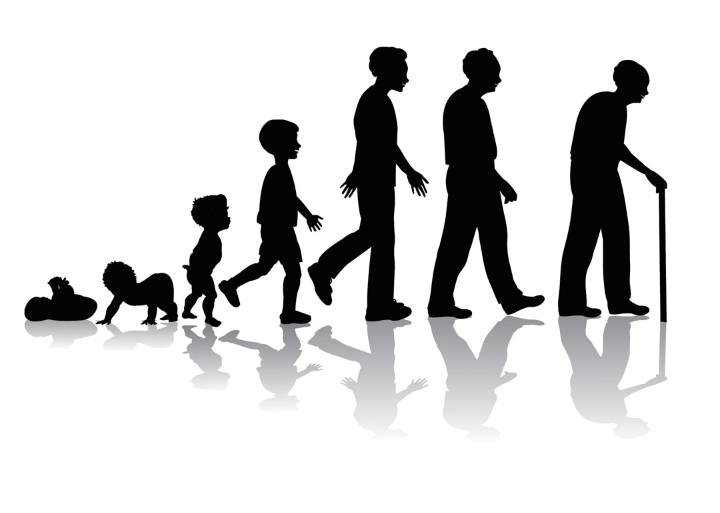
What is age? A simple question but not that easy to answer. ‘Unmasking Age’ addresses it using data from a series of research initiatives referring to later life. This is supplemented by material from various different sources together with diaries and fiction. Drawing on an extended profession in social research
Age is the interval of time between the day, month and year of birth and the day and year of occurrence of the event expressed in the most important completed unit of sun time such as years for adults and children and months, weeks, days, hours or minutes of life, as appropriate, for infants under one year of age.
The concept of age describes how old a person is at a specific point in time. It is defined as the measure of the time elapsed from date of live delivery to a specific point in time, usually the date of collection of the data
Is 50 taken into consideration “old”? When do we stop being considered “young”? If people could choose to be any age, what would it be?
In a sample of 502,548 net respondents ranging in age from 10 to 89, we tested age differences in aging perceptions (e.g., how old do you feel?) and estimates of the timing of developmental transitions (e.g., when does a person turn out to be an older adult?). I found that older adults reported older perceptions of aging (e.g., choosing to be older, feeling older, being perceived as older), but that these perceptions were increasingly younger than their current age. The age to which individuals hope to live dramatically increased after age 40. We also found that older adults placed the age at which developmental transitions took place later in the lifestyles course. This latter effect was more potent for transitions regarding middle-age and older maturity compared to transitions involving young adulthood. The current study constitutes the largest study to date of age differences in age perceptions and developmental timing estimates and yielded novel insights into how the aging process may affect judgments about the self and others.
“I will in no way be an vintage man. To me, old age is always 15 years older than I am.”– Francis Bacon
Walking through a birthday card aisle offers plenty of reminders about how aging is something to avoid. Life begins at 40. Fifty is the new 30. Although these cards often represent tongue-in-cheek ways of helping the recipient feel better about aging, very little is known about how both perceptions of age and estimates of the timing of developmental transitions differ by age. Is 50 “old”? When do we stop being “young”? If individuals could choose to be any age, what age would they be? The current study examines age differences in aging perceptions (e.g., how old do you feel?) and estimates of the timing of developmental transitions (e.g., when does someone become an older adult?).
Perceptions of getting old
In the current study, we operationalize aging perceptions as evaluations individuals tie to different ages by reporting (a) the age they would like to ideally be, (b) the age they feel like, (c) the age they hope to live until, and (d) how old other people think they are. To date, most research has focused on lifespan differences in and consequences of (b), which researchers refer to as subjective age. There is a huge literature documenting the antecedents and outcomes of subjective age that highlights the roles of subjective health, age-group reference effects, gendered experiences, and aging attitudes. The preponderance of research suggests that adults tend to report feeling younger than their chronological age (e.g., up to 20% younger) and this effect increases with age. Reporting a younger subjective age is associated with a wide variety of benefits for health and well-being. However, feeling younger is not the only aging perception that changes throughout the lifespan. There are also corresponding shifts toward youth for how old people think they look, what their interests are, and the activities they like to engage in.
Why does a shift toward affiliating with youth happen more as people age? Insights from the age-group dissociation effect provide a potential explanation. In short, people attempt to psychologically dissociate themselves from stigmatized groups (i.e., older adults). When stigmatized outgroups are salient, people engage in avoidance-oriented behavior. Motivations underlying the age-group dissociation effect can be identified in the evolutionary psychology literature. For example, inclusive health cues motivate individuals to prefer helping younger relative to older adults in times of need. Likewise, individuals often associate older adults with weakness, resource waste, and viable publicity to infectious disease—all of which lead to higher levels of stigma.
Previous research has identified many antecedents and outcomes of the age-group dissociation effect. For example, openness to experience and less conventional gender ideologies is probably shielding elements for well-being among people present process difficult and uncertain age transitions. Further, age group dissociation can protect individuals from the deleterious effect that negative age stereotypes have for older adults’ self-esteem. Some of the distancing techniques that older adults employ include identifying with middle aged adults and even directing their attention away from other older adults.
In sum, older adulthood is an identity that carries significant stigma, and individuals become increasingly closer to assuming this stigmatized identity as they age. When people become older adults, they could view themselves as becoming part of a group to which they have held bad attitudes toward their whole life. In general, individuals are motivated to create mental and physical distance among themselves and stigmatized outgroups. In this case, one way in which people can enhance this distance is to identify with younger age groups, whether that be through selectively reporting feeling younger than they are, reporting that others understand them as being younger, or choosing a younger ideal age to be. By extension, young people might record a relatively older subjective age given their desire to affiliate with a more desirable group.
There is also a sense that an individual’s reference group modifications as they age. For example, younger adults who compare themselves to other younger adults are not likely to distort their subjective age because teenagers are not a stigmatized group. However, adolescents and older adults share a motivation to identify with more extraordinarily seemed age groups and thus distort or shift their perceptions of aging. Nevertheless, even in the context of age-group dissociation, older adults, being closer to the end of their lives, may push their ideal life expectancy to an older age from a motivation toward self-preservation. Indeed, multiple research have shown that older adults increase their ideal-age-to-live-until as a way of elongating horizons in the face of mortality. Some researchers have also hypothesized that older maturity might serve as a reminder of mortality—triggering protective, life-elongating protection mechanisms to mitigate the tension that arises from these reminders.
Given research on the age-group dissociation effect in which people try to psychologically distance themselves from older adults, we hypothesized that, in comparison to more youthful adults, older adults might report (a) ages that they ideally would really like to be which are older, albeit a while which might be more and more more younger than their chronological age, (b) older subjective ages, albeit ages that are increasingly younger than their chronological age and (c) being perceived by others as older, albeit increasingly more youthful than their chronological age. Younger adults will document age perceptions towards their chronological age due to the fact younger adults aren’t stigmatized in the identical way that older adults are. Given studies on self-preservation and mortality reminders, we also hypothesized that older adults would report an older ideal age to live until.
Developmental transitions
The exact age at which older adulthood starts is hotly debated in the social and developmental psychology literature. Different fields and researchers use different indices—biological indices. cognitive indices, anticipated years left to live or ancient standards —for determining what makes someone old. Like aging perceptions, the perceived timing of developmental transitions depends on where people are in the life course. For example, older adults tend to report that older adulthood happens at a later age relative to younger adults. Indeed, a current Pew survey further replicated this effect, showing adults 18–29 believe that a person becomes old at age 60, whereas middle-aged respondents believe that a person becomes old at age 72; respondents aged 65 and older believed that a person becomes old at age 74. Longitudinal studies of middle-aged adults suggest a similar effect—that individuals “elongate” the age range that one is considered a middle-aged adult as they live through this period themselves.

 Peak News