Categories
Article

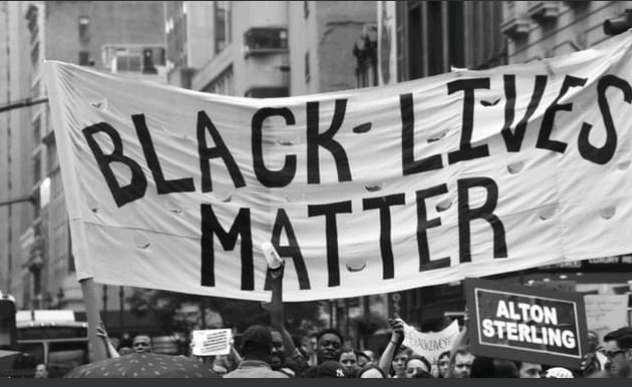
The Danger of the “Black Lives Matter” Movement

Heather Mac Donald is the Thomas W. Smith Fellow at the Manhattan Institute and a contributing editor of City Journal. She earned a B.A. from Yale University, an M.A. in English from Cambridge University, and a J.D. from Stanford Law School. She writes for several newspapers and periodicals, including The Wall Street Journal, The New York Times, The New Criterion, and Public Interest, and is the author of four books, including The War on Cops: How The New Attack on Law and Order Makes Everyone Less Safe and The Diversity Delusion: How Race and Gender Pandering Corrupt the University and Undermine Our Culture.

For almost two years, a protest movement known as “Black Lives Matter” has convulsed the nation. Triggered by the police shooting of Michael Brown in Ferguson, Missouri, in August 2014, the Black Lives Matter movement holds that racist police officers are the greatest threat facing young black men today. This belief has triggered riots, “die-ins,” the murder and attempted murder of police officers, a campaign to eliminate traditional grand jury proceedings when police use lethal force, and a presidential task force on policing. Even though the U.S. Justice Department has resoundingly disproven the lie that a pacific Michael Brown was shot in cold blood while trying to surrender, Brown is still venerated as a martyr. And now police officers are backing off of proactive policing in the face of the relentless venom directed at them on the street and in the media. As a result, violent crime is on the rise.

The need is urgent, therefore, to examine the Black Lives Matter movement’s central thesis—that police pose the greatest threat to young black men. I propose two counter hypotheses: first, that there is no government agency more dedicated to the idea that black lives matter than the police; and second, that we have been talking obsessively about alleged police racism over the last 20 years in order to avoid talking about a far larger problem—black-on-black crime. Let’s be clear at the outset: police have an indefeasible obligation to treat everyone with courtesy and respect, and to act within the confines of the law. Too often, officers develop a hardened, obnoxious attitude. It is also true that being stopped when you are innocent of any wrongdoing is infuriating, humiliating, and sometimes terrifying. And needless to say, every unjustified police shooting of an unarmed civilian is a stomach-churning tragedy.

Given the history of racism in this country and the complicity of the police in that history, police shootings of black men are particularly and understandably fraught. That history informs how many people view the police. But however intolerable and inexcusable every act of police brutality is, and while we need to make sure that the police are properly trained in the Constitution and in courtesy, there is a larger reality behind the issue of policing, crime, and race that remains a taboo topic. The problem of black-on-black crime is an uncomfortable truth, but unless we acknowledge it, we won’t get very far in understanding patterns of policing.

Every year, approximately 6,000blacks are murdered. This is a number greater than white and Hispanic homicide victims combined, even though blacks are only 13 percent of the national population. Blacks are killed at six times the rate of whites and Hispanics combined. In Los Angeles, blacks between the ages of 20 and 24 die at a rate 20 to 30 times the national mean. Who is killing them? Not the police, and not white civilians, but other blacks. The astronomical black death-by-homicide rate is a function of the black crime rate. Black males between the ages of 14 and 17 commit homicide at ten times the rate of white and Hispanic male teens combined. Blacks of all ages commit homicide at eight times the rate of whites and Hispanics combined, and at eleven times the rate of whites alone. The police could end all lethal uses of force tomorrow and it would have at most a trivial effect on the black death-by-homicide rate. The nation’s police killed 987 civilians in 2015, according to a database compiled by The Washington Post. Whites were 50 percent—or 493—of those victims, and blacks were 26 percent—or 258. Most of those victims of police shootings, white and black, were armed or otherwise threatening the officer with potentially lethal force. The black violent crime rate would actually predict that more than 26 percent of police victims would be black.

Officer use of force will occur where the police interact most often with violent criminals, armed suspects, and those resisting arrest, and that is in black neighbourhoods. In America’s 75 largest counties in 2009, for example, blacks constituted 62 percent of all robbery defendants, 57 percent of all murder defendants, 45 percent of all assault defendants—but only 15 percent of the population.

Moreover, 40 percent of all cop killers have been black over the last decade. And a larger proportion of white and Hispanic homicide deaths are a result of police killings than black homicide deaths—but don’t expect to hear that from the media or from the political enablers of the Black Lives Matter movement. Twelve percent of all white and Hispanic homicide victims are killed by police officers, compared to four percent of all black homicide victims. If we’re going to have a “Lives Matter” anti-police movement, it would be more appropriately named “White and Hispanic Lives Matter.” Standard anti-cop ideology, whether emanating from the ACLU or the academy, holds that law enforcement actions are racist if they don’t mirror population data. New York City illustrates why that expectation is so misguided. Blacks make up 23 percent of New York City’s population, but they commit 75 percent of all shootings, 70 percent of all robberies, and 66 percent of all violent crime, according to victims and witnesses. Add Hispanic shootings and you account for 98 percent of all illegal gunfire in the city. Whites are 33 percent of the city’s population, but they commit fewer than two percent of all shootings, four percent of all robberies, and five percent of all violent crime. These disparities mean that virtually every time the police in New York are called out on a gun run—meaning that someone has just been shot—they are being summoned to minority neighbourhoods looking for minority suspects.

Officers hope against hope that they will receive descriptions of white shooting suspects, but it almost never happens. This incidence of crime means that innocent black men have a much higher chance than innocent white men of being stopped by the police because they match the description of a suspect. This is not something the police choose. It is a reality forced on them by the facts of crime. The geographic disparities are also huge. In Brownsville, Brooklyn, the per capita shooting rate is 81 times higher than in nearby Bay Ridge, Brooklyn—the first neighbourhood predominantly black, the second neighbourhood predominantly white and Asian. As a result, police presence and use of proactive tactics are much higher in Brownsville than in Bay Ridge. Every time there is a shooting, the police will flood the area looking to make stops in order to avert a retaliatory shooting. They are in Brownsville not because of racism, but because they want to provide protection to its many law-abiding residents who deserve safety.

Who are some of the victims of elevated urban crime? On March 11, 2015, as protesters were once again converging on the Ferguson police headquarters demanding the resignation of the entire department, a six-year-old boy named Marcus Johnson was killed a few miles away in a St. Louis park, the victim of a drive-by shooting. No one protested his killing. Al Sharpton did not demand a federal investigation. Few people outside of his immediate community know his name. Ten children under the age of ten were killed in Baltimore last year. In Cleveland, three children five and younger were killed in September. A seven-year-old boy was killed in Chicago over the Fourth of July weekend by a bullet intended for his father. In November, a nine-year-old in Chicago was lured into an alley and killed by his father’s gang enemies; the father refused to cooperate with the police. In August, a nine-year-old girl was doing her homework on her mother’s bed in Ferguson when a bullet fired into the house killed her. In Cincinnati in July, a four-year-old girl was shot in the head and a six-year-old girl was left paralysed and partially blind from two separate drive-by shootings. This mindless violence seems almost to be regarded as normal, given the lack of attention it receives from the same people who would be out in droves if any of these had been police shootings. As horrific as such stories are, crime rates were much higher 20 years ago. In New York City in 1990, for example, there were 2,245 homicides. In 2014 there were 333—a decrease of 85 percent. The drop in New York’s crime rate is the steepest in the nation, but crime has fallen at a historic rate nationwide as well—by about 40 percent— since the early 1990s. The greatest beneficiaries of these declining rates have been minorities. Over 10,000 minority males alive today in New York would be dead if the city’s homicide rate had remained at its early 1990s level.

What is behind this historic crime drop? A policing revolution that began in New York and spread nationally, and that is now being threatened. Starting in 1994, the top brass of the NYPD embraced the then-radical idea that the police can actually prevent crime, not just respond to it. They started gathering and analysing crime data on a daily and then hourly basis. They looked for patterns, and strategised on tactics to try to quell crime outbreaks as they were emerging. Equally important, they held commanders accountable for crime in their jurisdictions. Department leaders started meeting weekly with precinct commanders to grill them on crime patterns on their watch. These weekly accountability sessions came to be known as Compstat. They were ruthless, high tension affairs. If a commander was not fully informed about every local crime outbreak and ready with a strategy to combat it, his career was in jeopardy. Compstat created a sense of urgency about fighting crime that has never left the NYPD. For decades, the rap against the police was that they ignored crime in minority neighbourhoods. Compstat keeps New York commanders focused like a laser beam on where people are being victimized most, and that is in minority communities. Compstat spread nationwide. Departments across the country now send officers to emerging crime hot spots to try to interrupt criminal behaviour before it happens.

In terms of economic stimulus alone, no other government program has come close to the success of data-driven policing. In New York City, businesses that had shunned previously drug-infested areas now set up shop there, offering residents a choice in shopping and creating a demand for workers. Senior citizens felt safe to go to the store or to the post office to pick up their Social Security checks. Children could ride their bikes on city side walks without their mothers worrying that they would be shot. But the crime victories of the last two decades, and the moral support on which law and order depends, are now in jeopardy thanks to the falsehoods of the Black Lives Matter movement. Police operating in inner-city neighbourhoods now find themselves routinely surrounded by cursing, jeering crowds when they make a pedestrian stop or try to arrest a suspect. Sometimes bottles and rocks are thrown. Bystanders stick cell phones in the officers’ faces, daring them to proceed with their duties. Officers are worried about becoming the next racist cop of the week and possibly losing their livelihood thanks to an incomplete cell phone video that inevitably fails to show the antecedents to their use of force. Officer use of force is never pretty, but the public is clueless about how hard it is to subdue a suspect who is determined to resist arrest. As a result of the anti-cop campaign of the last two years and the resulting push-back in the streets, officers in urban areas are cutting back on precisely the kind of policing that led to the crime decline of the 1990s and 2000s. Arrests and summons are down, particularly for low-level offences. Police officers continue to rush to 911 calls when there is already a victim. But when it comes to making discretionary stops—such as getting out of their cars and questioning people hanging out on drug corners at 1:00 a.m.—many cops worry that doing so could put their careers on the line. Police officers are, after all, human. When they are repeatedly called racist for stopping and questioning suspicious individuals in high-crime areas, they will perform less of those stops. That is not only understandable—in a sense, it is how things should work. Policing is political. If a powerful political block has denied the legitimacy of assertive policing, we will get less of it.

On the other hand, the people demanding that the police back off are by no means representative of the entire black community. Go to any police – neighbourhood meeting in Harlem, the South Bronx, or South Central Los Angeles, and you will invariably hear variants of the following: “We want the dealers off the corner.” “You arrest them and they’re back the next day.” “There are kids hanging out on my stoop. Why can’t you arrest them for loitering?” “I smell weed in my hallway. Can’t you do something?” I met an elderly cancer amputee in the Mount Hope section of the Bronx who was terrified to go to her lobby mailbox because of the young men trespassing there and selling drugs. The only time she felt safe was when the police were there. “Please, Jesus,” she said to me, “send more police!” The irony is that the police cannot respond to these heartfelt requests for order without generating the racially disproportionate statistics that will be used against them in an ACLU or Justice Department lawsuit.

Unfortunately, when officers back off in high crime neighbourhoods, crime shoots through the roof. Our country is in the midst of the first sustained violent crime spike in two decades. Murders rose nearly 17 percent in the nation’s 50 largest cities in 2015, and it was in cities with large black populations where the violence increased the most. Baltimore’s per capita homicide rate last year was the highest in its history. Milwaukee had its deadliest year in a decade, with a 72 percent increase in homicides. Homicides in Cleveland increased 90 percent over the previous year. Murders rose 83 percent in Nashville, 54 percent in Washington, D.C., and 61 percent in Minneapolis. In Chicago, where pedestrian stops are down by 90 percent, shootings were up 80 percent through March 2016. I first identified the increase in violent crime in May 2015 and dubbed it “the Ferguson effect.” My diagnosis set off a firestorm of controversy on the anti-cop Left and in criminology circles. Despite that furore, FBI Director James Comey confirmed the Ferguson effect in a speech at the University of Chicago Law School last October. Comey decried the “chill wind” that had been blowing through law enforcement over the previous year, and attributed the sharp rise in homicides and shootings to the campaign against cops. Several days later, President Obama had the temerity to rebuke Comey, accusing him (while leaving him unnamed) of “cherry-picking data” and using “anecdotal evidence to drive policy [and] feed political agendas.” The idea that President Obama knows more about crime and policing than his FBI director is of course ludicrous. But the President thought it necessary to take Comey down, because to recognize the connection between proactive policing and public safety undermines the entire premise of the anti-cop Left: that the police oppress minority communities rather than bring them surcease from disorder. As crime rates continue to rise, the overwhelming majority of victims are, as usual, black—as are their assailants. But police officers are coming under attack as well. In August 2015, an officer in Birmingham, Alabama, was beaten unconscious by a convicted felon after a car stop. The suspect had grabbed the officer’s gun, as Michael Brown had tried to do in Ferguson, but the officer hesitated to use force against him for fear of being charged with racism. Such incidents will likely multiply as the media continues to amplify the Black Lives Matter activists’ poisonous slander against the nation’s police forces.

The number of police officers killed in shootings more than doubled during the first three months of 2016. In fact, officers are at much greater risk from blacks than unarmed blacks are from the police. Over the last decade, an officer’s chance of getting killed by a black has been 18.5 times higher than the chance of an unarmed black getting killed by a cop. The favourite conceit of the Black Lives Matter movement is, of course, the racist white officer gunning down a black man. According to available studies, it is a canard. A March 2015 Justice Department report on the Philadelphia Police Department found that black and Hispanic officers were much more likely than white officers to shoot blacks based on “threat misperception,” i.e., the incorrect belief that a civilian is armed. A study by University of Pennsylvania criminologist Greg Ridgeway, formerly acting director of the National Institute of Justice, has found that black officers in the NYPD were 3.3 times more likely to fire their weapons at shooting scenes than other officers present. The April 2015 death of drug dealer Freddie Gray in Baltimore has been slotted into the Black Lives Matter master narrative, even though the three most consequential officers in Gray’s arrest and transport are black. There is no evidence that a white drug dealer in Gray’s circumstances, with a similar history of faking injuries, would have been treated any differently. We have been here before. In the 1960s and early 1970s, black and white radicals directed hatred and occasional violence against the police. The difference today is that anti-cop ideology is embraced at the highest reaches of the establishment: by the President, by his Attorney General, by college presidents, by foundation heads, and by the press. The presidential candidates of one party are competing to see who can out-demagogue President Obama’s persistent race-based calumnies against the criminal justice system, while those of the other party have not emphasized the issue as they might have.

I don’t know what will end the current frenzy against the police. What I do know is that we are playing with fire, and if it keeps spreading, it will be hard to put out.

Adapted from a speech delivered on April 27, 2016, at Hillsdale College’s Allan P. Kirby, Jr. Center for Constitutional Studies and Citizenship in Washington, D.C., as part of the AWC Family Foundation Lecture Series.
Categories
Article

YAHAYA BELLO AND THE EMBARRASSMENT OF YOUTHS IN GOVERNANCE

By. Pelumi Olajengbesi Esq.

When only a few years ago Nigerian youths applauded President Buhari’s assent into law the Not Too Young to Run Bill, not many could have predicted that the arguments for the involvement of the comparatively young in government would be defeated, flawed if you prefer, by one of the president’s biggest supporter and party colleague in the person of the pugilistic Governor of Kogi State, Mr. Yahaya Bello.

The ululations that attended what was lauded as a landmark shift in our political experiment that sought to reflect the changing demographics of Africa’s most populous nation and help usher in younger leaders have long since dwindled to an embarrassing murmur of sheer disbelief in the capacity for deceit, corruption and ineptitude that has plagued the Kogi state government and people under the embarrassing rule of Governor Yahaya Bello- Nigeria’s youngest serving governor by age.

Recent confirmation by the EFCC of Governor Yahaya Bello’s attempt to hoard state relief funds for personal gains is a rare revelation into the elevation of corruption as a strategy for deliberate mis-governance and avarice that has stunted the development of the state and made rubbish of the vigorous arguments for the inclusivity of youths and the comparatively young in government. Lacking, therefore, the mettle of integrity necessary to offer his resignation over the scandal that now engulfs his government, Mr. Yahaya Bello must thus be shown the exit door through legislative impeachment.

This is a sacred duty and intervention that Kogi state legislators owe their people as a redemptive first-step in rescuing the coffers of the people from the avarice of a young but dishonourable ‘yoot guvernor’. Failure to act with dispatch and alacrity in this vein would amount to a legislative seal of approval over the attempted theft and aborted mis-appropriation of the commonwealth of the people of Kogi state.

Governor Yahaya Bello represents a poor example of a political Nigerian youth, and is one whose leadership is a crying shame to the progenitors of the Not Too Young to Run or Rule campaign that favourably disposed Nigerians to the idea of having much younger persons in positions of political authority in the country. He has squandered the goodwill and faith of many, and trampled on the aspirations of many more by his unremarkable cupidity.

Even so, the uncomfortable truth which Governor Yahaya Bello’s rapacity has brought to the fore is that the quality of a leader’s character matters just as much if not more than their age. The Not Too Young to Run bill ‘merely emphasizes the dysfunctional structures of the nation’s democratic amalgam and the lopsided economic disparities between the mighty old ruling class and the deliberately pauperised youths by the same obstructing criminal political elites. It does not confer any measure of competence in an aspiring youth in just about the same vein that grey hairs does not translate to outright proficiency in political leadership.

In aiming for clarity and sanity in our polity and politics, the likes of Governor Yahaya Bello must not be allowed to thrive. One can vouchsafe that his attempt to hide away over N19Billion of taxpayers money was part of the building process of a war chest for his rather laughable presidential ambition. Again, to have to confront in a relatively young leader such an incident of money politics amidst queries of the electoral ethos of elected leaders is to emphasise that besides spirit and vigour, young age alone is not prescient of leadership competence. Governor Yahaya Bello who now represents all that must be abhorred and eschewed in our politics must thus be made an example of- impeached and prosecuted, to set the tone for the future.

Categories
Article

Is Love An Illusion? By Sola Omoniyi Omoyajowo

Illusions are, by definition, mismatches between physical reality and perception. Love, as with all emotions, has no external physical reality: it may be driven by neural events, but it is nonetheless a purely subjective experience.

Love is an immensely overrated illusion, the greatest of all time. Falling out of love makes you sober. Falling in love might make you insane.

For some, love is the best thing in the world. Love is the source of all of the joy and beauty to be had in life, and without love, life is a shell, empty of meaning. For some, love is a pleasant enough experience, and having a partner is a delight when the time is right. For still others, though, love is an illusion, largely manufactured by media over millennia, given credence by religion, spoken tradition, and written tradition, without the scientific backing or reasoning to lend it actual credence.

love is an illusion

For some of those individuals, this might legitimately be the case. Love may merely be a chemical reaction aroused by novelty and shared interests. For others, however, this view of love was borne of a broken heart or disappointed hopes, and functions more as a protective mechanism than an actual deeply held belief. For those individuals, learning to let go of doubt and consider the possibility of love can lead to emotional freedom.

“Love Is An Illusion”
Ah, the quandary of the poet and the musician: what exactly is love? Fortunately, scientists do have a hand in this question, as well as centuries of artists seeking to uncover the truth. From a biological perspective, love is a series of chemical reactions, creating a bodily sensation, which then transforms into other bodily sensations, and culminates in an evolution-driven attachment. From an emotional perspective, love is a feeling that evokes images of flowers, smiling, and holding hands. From a spiritual perspective, love is an experience of being willing to lay down one’s life for another, of moving toward sacrifice and wholeness in communion with someone else.

All of these together can be love, while a single one of them fails to adequately and accurately quantify exactly what love is. Despite countless research studies, poems, plays, and works of art dedicated to this question-devoted entirely to determining just what love is and what it looks like-love remains stubbornly elusive, and entirely personal to each and every one of us. What love means to one person, it does not mean to another, and what love looks like to one person is entirely different from another. For this reason, love cannot be quantified, but is typically satisfied by this: feelings of affection, a willingness to sacrifice, and some form of commitment.

Losing Belief in Love
Losing belief in love can come from a variety of places. Although a broken heart due to a lost romantic connection is most often pointed to as the cause, this takes a narrow view of the damages potentially caused by loved ones as a whole, including family, friends, and mentors. A perceived betrayal-or series of betrayals-by anyone in whom you had trust has the potential to decimate your views of love and create doubt as to whether or not love is real or wholly imagined.

A ruptured relationship with a parent can cause loss in the belief that love exists. Parents or caregivers are usually the first people who teach us how to forge connections and what love should (and does) look like. If a parent is neglectful, cruel, or even consistently inconsiderate, this can erode your views of love quickly, and create the suspicion that the love so often talked about is not real, after all, but is a construct of people with an agenda-or people who just don’t know any better.

Failed friendships can also damage a belief in love. Friendships are also among the most trusting, vulnerable relationships you can have. If a friend betrays you, forgets something important, or lets you down, you might also experience a loss of belief in love-particularly if it is a close friend who has let you down.

Mentors can also plant seeds of doubt regarding love. Usually, mentors or other people you look up to create doubt about love through their own failures in love, or their own losses. A respected mentor who has an affair and gets a divorce, for instance, might cause you to second-guess whether or not love exists. A mentor who gives up on a friend after years of closeness can sow doubt. When you look up to someone, you very often work to mimic their choices and behavior, and witnessing a fall-especially a romantic or love-related one-can create doubt as to whether or not love is real for them and for you.

Letting Go of Doubt

There is very often a good reason to doubt love, and disregarding that reason altogether is neither helpful for healing, nor helpful in learning new ways to look at love. Instead, finding and acknowledging the reason for your doubt is paramount. If you experienced childhood neglect, trauma, or abuse, for instance, honoring and healing that abuse is going to be the first step in healing your doubt about love. Working with a qualified healthcare professional to search back through your childhood, adolescence, and even adult life for the traces of familial pain is an integral part of healing; as you work through old trauma, years of fear, stress, and guilt can start to arise, and can cause a lot of unexpected pain and emotional distress. Having someone to work with you and guide you through the process will help keep transitions and healing phases smooth, straightforward, and appropriate.

Once you’ve begun healing, you can start to look at redefining your own ideas about love and what it might look like for you. Again, this doesn’t have to be romantic in nature; you can identify what type of parental relationship you’d like to have, or what type of friendship you hope for in the future. You can do this in the form of a simple list, or you can journal about anything you’d like to see moving forward in your life. Journaling can be an enormously helpful therapeutic tool and may help you in your healing journey.

Finally, reaching out is the final step of learning to let go of doubt. Reaching out in search of relationship-friendship, mentorship, or a romantic relationship-is the final step, putting your hopes into action. This step can be the most difficult of all-and has the potential to be the most damaging of all, in the case of rejection, or finding yourself being let down again. Stepping into a new relationship with someone, you always run the risk of disappointment. You might not connect the way you’d hoped, you might find yourself wanting different things, or you might just not have the wherewithal to go forward in the relationship. Walking forward with trust in yourself and the possibility of love-and love for yourself-can ease some of that pain, as it doesn’t put as much pressure on the relationship to succeed.

Forging Ahead with Hope-and Care

As you move forward, having let go of some of the doubt you’d previously harbored, you still have to be on guard; not every new relationship is going to flourish. Some of them might end as a matter of mutual agreement, some of them might prove difficult, as you both come with expectations, and some of them might just naturally peter out, as you move in different directions. Consequently, you don’t want to throw yourself headfirst into each new relationship you encounter; making time for yourself, prioritizing your healing, and continuing to reflect on what you want and hope for is essential in making sure you continue to heal and grow in your relationship to love and your relationship to yourself.

Caring for yourself moving forward, you must recognize and live as though you believe you are both worthy and capable of love; failing to do so, each new relationship you try-even after working on past trauma-will result in pain, confusion, and failure, because you will not have the emotional breadth to give yourself to someone, and receive love and attention in return.

Despite the pain of having been neglected, lied to, disappointed, or hurt, you have a distinct advantage in the realm of love that others who have not experienced similarly difficult things might not have: you know the importance of doing-and being-better. Once you’ve known the pain of neglect, you can better understand how not to neglect others. If you’ve experienced the pinpricks of betrayal, you understand the importance of remaining true to someone. And if you’ve been put through the wringer via unfaithfulness, you know better than to be unfaithful.

Doubting love is difficult and painful. As you work to improve your relationship with love, however, and heal past wounds, you can not only climb out of the painful pit you’ve dwelled in, but you can emerge a human being better suited for emotional relationships, commitment, and care, and can move forward, stepping away from the wounds others have inflicted on you. You can pay your healing forward in your life and demonstrate to other doubters and people in the midst of healing that love does exist-and you are living proof.

Categories
News

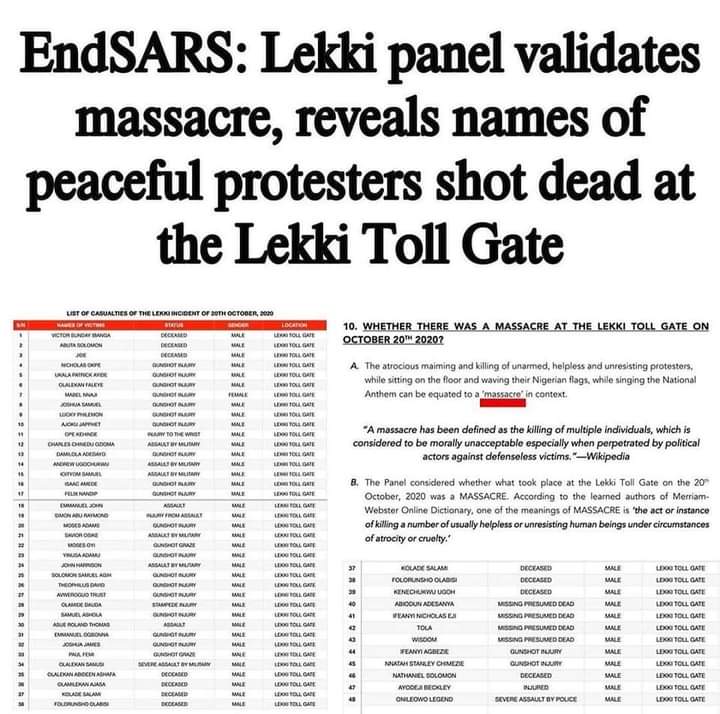
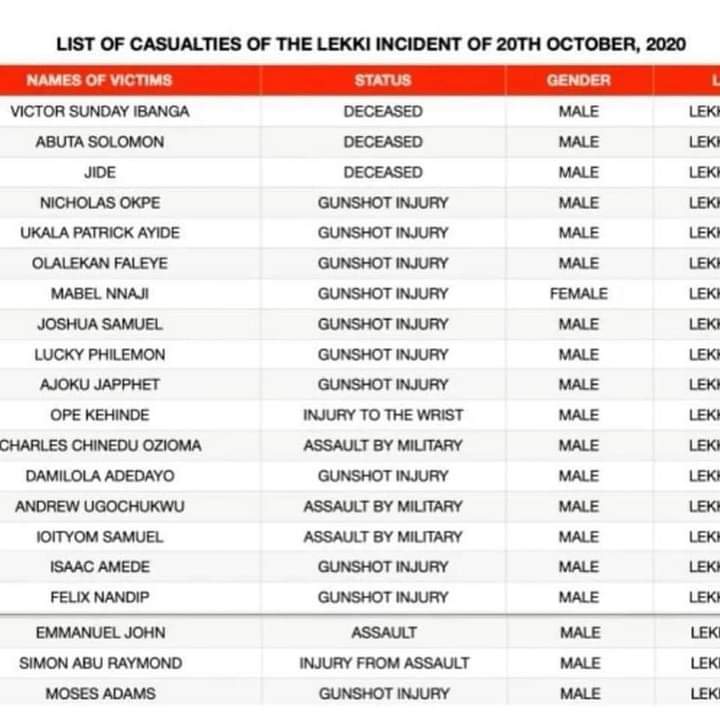
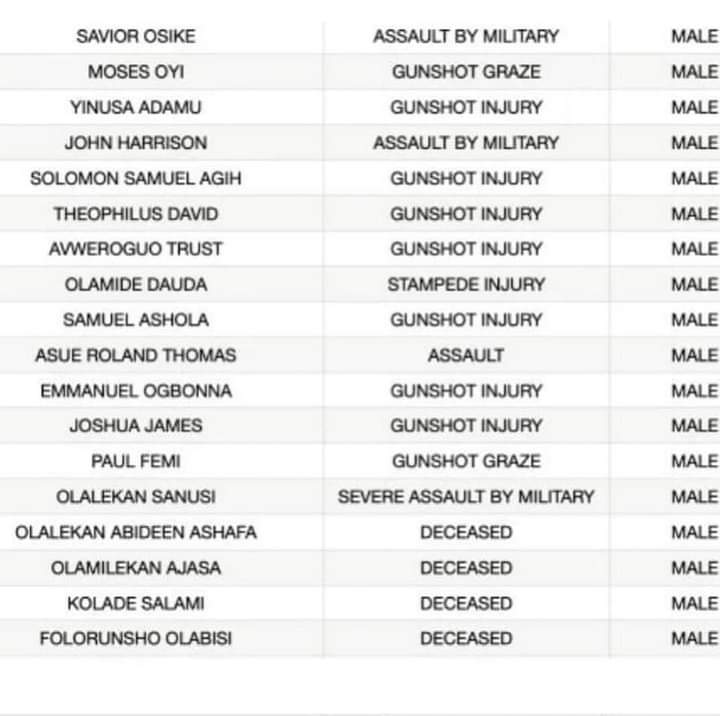
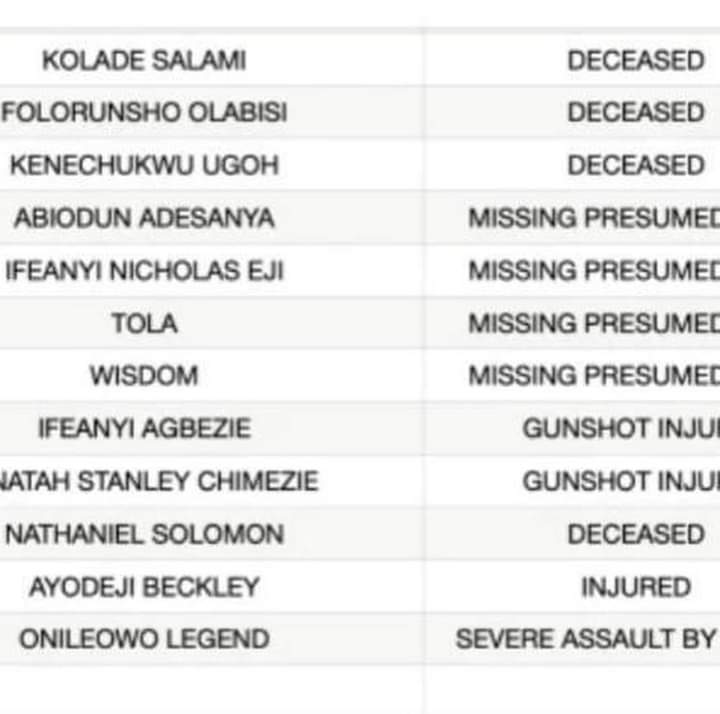
EndSARS: 11 Killed, Four Missing, 24 Injured At Lekki Toll Gate -Lagos Panel

The Lagos State Judicial Panel of Inquiry on Restitution for victims of SARS-related abuses and other matters on Monday presented its report which revealed that 11 protesters were killed at the Lekki Tollgate on Tuesday, October 20, 2020.

Four persons were declared missing while 24 others were injured that night.

Categories
Article

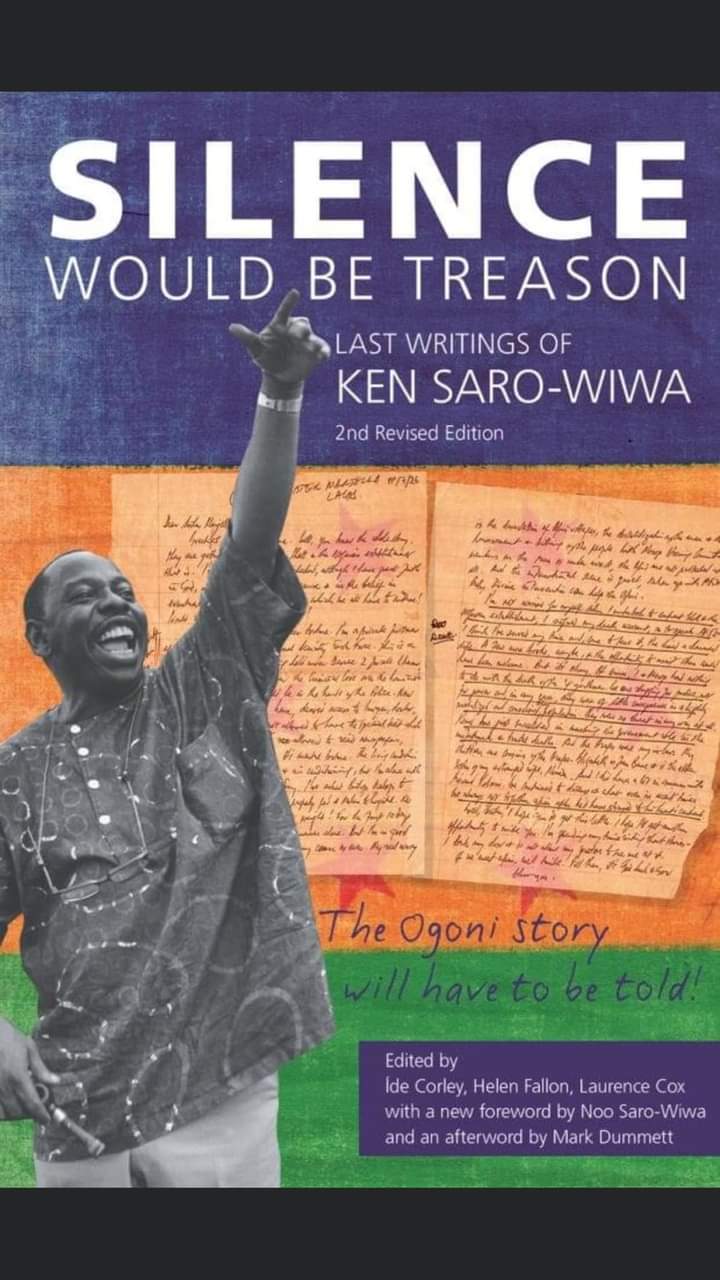
WHY WE MUST NOT ALLOW INNOCENT KEN SARO-WIWA TO DIE GUILTY! By Frederick Odorige

Today marks 26 years since KENULE BEESON “Ken” Saro-Wiwa was killed.

It is a generational insult for the regime of Buhari-Osinbajo to consider pardoning Ken Saro-Wiwa who committed no offence.

Evil Sani Abacha butchered  the author, journalist and activist Ken Saro-Wiwa and melted his corpse with acid on 10 November 1995, just as the body of Saudi Arabian journalist Jamal Khashoggi, was cut and reportedly melted in acid at their embassy in Istanbul, Turkey on 2 October 2018.

Nigeria is suffering today because the spirits of our innocent compatriots killed by evil hands  are continually crying for justice. We must quickly appease the dead. We drive on the roads filled with the dried blood of our compatriots. 
Nigeria needs healing!!
That is why, President after President, the brains of those that occupy Aso Rock reason in reverse gear immediately after swearing to the oath of office. The spirits haunt them so badly that even Professors are turned into dummies.
To die without a grave is not to have died. Their spirits hovers around are geographical landscape. They bleat at night and howl at day.

Sadly, those in the Niger Delta who claim to be fighting for resource control, now see the struggle as private business.
The likes of Asari Dokubo et al,  transfer money made from the struggle to Benin Republic to build schools and private empires because they feels that his people back home do not deserve good life. Would Ken had done that?
They further impoverish the same people they pretend to be fighting for.

Other Niger Deltans now use NDDC to milk their people. They collect projects which they never execute. Would Ken had done that? NO!
26 years after Ken  Ogoni does not have steady electricity. Poverty remains a culture.

Now, Godswill Akpabio, the corrupt Minister of the Niger delta is at work. He doctored the forensic report of the finances of NDDC and silently submitted it to Justice Minister Malami who is currently sitting on the report based on the deal of Minister to Minister. How could a President call for a panel and the Minister involved, submits the report to another Minister? They know that Buhari has mentally forgotten that he set up a panel for that purpose. Little wonder, in 1948, Alan Paton titled his book, “Cry, thy beloved country!”
Malami and Akpabio strongly believe that Nigerians will forget about the report as events overtake events.
Whenever the regime of Buhari-Osinbajo wish to end a matter, theý set up a panel. Where is the report of the panel set up to investigate the invasion of the court by DSS on 6 November 2020? Where is the report of the panel set up for Ibrahim Magu, Chairman of EFCC? Where is the report on Abba Kyari of the Police Response Team? The list is on.

We wait and we watch.

We must call on all Niger delta legislators to move this motion:
Exonerate Saro Wiwa and others. Apologize and compensate their families. The time is NOW!!
A time is coming in Nigeria when “Silence would be treason”.

The change we expect shall not come from the insidious promises of politicians; it can only come from the will power, sheer sagacity, collective voicing and collective marching of we, the people.

Revolution wails in waiting.
Yours truly,

Frederick Odorige

Categories
News

DESIST FROM TENURE EXTENSION CAMPAIGN, I WILL LEAVE ON 29 MAY, 2023. ~PRESIDENT BUHARI | PeakNews

“I swore by the Holy Qur’an that I will serve in accordance with the constitution and leave when my time is up. No “Tazarce’’ (tenure extension). I don’t want anybody to start talking about and campaigning for unconstitutional extension. I will not accept that.”

So declared President Muhammadu Buhari at a meeting in Makkah with a select group of Nigerians resident in the Kingdom of Saudi Arabia where he just ended a visit.

President Buhari also tacitly expressed support to efforts to increase the role of technology in the nation’s elections, arguing that the introduction of the card reader and electronic register was God’s answer to his prayers, having been cheated of his victory in three previous elections.

“After the third so-called defeat, I said, ‘God Dey’. My opponents laughed at me but God answered my prayers by bringing in technology. At that point, nobody can steal their votes or buy them,” the President added.

President Buhari, who ended his visit to the Kingdom with the Friday Prayers at the Grand Mosque in Makkah said he will continue to abide by the constitution in all its ramifications and he will at all times supervise and deal with his ministers on same basis.

He gave assurances at the meeting that in the balance of “eighteen months or so of my time left, whatever I can do to improve the life of Nigerians, I will do it for the country.”

The President commended diaspora Nigerians in the Kingdom for representing the country well and projecting its good image.

He also used the opportunity to urge citizens at home to be fair to his administration at all times, asking the critics to compare the security situations in the North East and South South in 2015 and how things have improved as at now.

“My problem is the North West where people are killing and stealing from one another. I had to be very hard on them and I will continue to be very hard until we put them in line and bring back order,” he said.

President Buhari urged Nigerians living in the country to respect the laws, remain law-abiding and do nothing to derogate from the many years of friendly and mutually beneficial relationships between the two countries.

A leader of the community, Dr. Abdulkadir Maikudi, who spoke on behalf of the group requested the President to assist the privately-run Nigerian International School in the Kingdom by equipping it to provide science and technical education.

The Nigerian Ambassador to Saudi Arabia, Yahaya Lawal and the Consul-General in Jeddah, Ambassador Abdulkarim Mansur attested to the good conduct of the nearly 1.5 million Nigerians there.

According to them, “Nigerian professionals are doing well and projecting a good image of our country.”

Categories
News

PANDORA PAPERS: How Pastor David Oyedepo set up family offshore company in tax haven

Faith Church Worldwide, also known as Winners’ Chapel International, Bishop David Oyedepo, has been identified in the list of Nigerians that set up offshore companies in the British Virgin Islands.

The investigation is part of the global International Consortium of Investigative Journalists (ICIJ)-led Pandora Papers project and which Nigeria’s PREMIUM TIMES is a part of.

The project involved 600 journalists from 150 news organisations around the world sorting and analysing a trove of almost 12 million confidential files, tracking down and interviewing sources, and adding context using public records and documents.

The leaked files were retrieved from some offshore services firms around the world that set up shell companies and other offshore entities for clients, many of them influential politicians, businesspersons, and criminals seeking to conceal their financial dealings.

Former Governor of Anambra State and Vice Presidential Candidate of the Peoples Democratic Party, Peter Obi, Governor of Kebbi State, Atiku Bagudu and that of Osun State, Gboyega Oyetola were the other prominent Nigerians that have been exposed in the tax haven scandal.

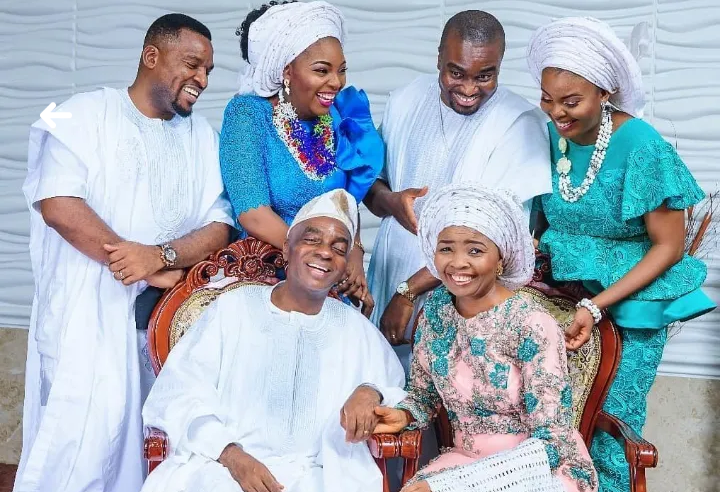
According to the report, Oyedepo in August 2007 contracted the services of Business Centrum Limited, a London-based agent, to help him set up a company in the infamous tax haven for him and his immediate family members.

“Business Centrum subsequently subcontracted Trident Trust Group, one of the world’s leading secrecy enablers and one of the most notorious providers of offshore corporate and financial services.

“The company, Zadok Investments Limited, was set up on August 20, 2007 with 50,000 ordinary shares with a value of $1.00 each.

“Although the directors of the company are Mr Oyedepo and his two sons – David (Junior) and Isaac, every member of Mr Oyedepo’s family are listed as shareholders.

“Mr Oyedepo and his wife, Faith, are the largest shareholders with 30 per cent of shares each.

“His children – David (junior), who in 2016 was appointed resident pastor of the headquarters of the church, known as Faith Tabernacle, has 10 per cent while Isaac, who is the resident pastor of the church’s branch in Maryland, the United States of America, also has 10 per cent of the shares.

“Love and Joy – the two daughters of the cleric – were similarly given 10 per cent shares each.

“The documents did not reveal the exact businesses and transactions the offshore company was set up to conduct. The entity however appears to be the family’s investment vehicle under which the family’s wealth is warehoused for offshore management,” the report read in part.

Categories
News

ARREST OF CHIWETALU AGU IS ILLEGAL AND UNCONSCIONABLE By Inibehe Effiong By Inibehe Effiong

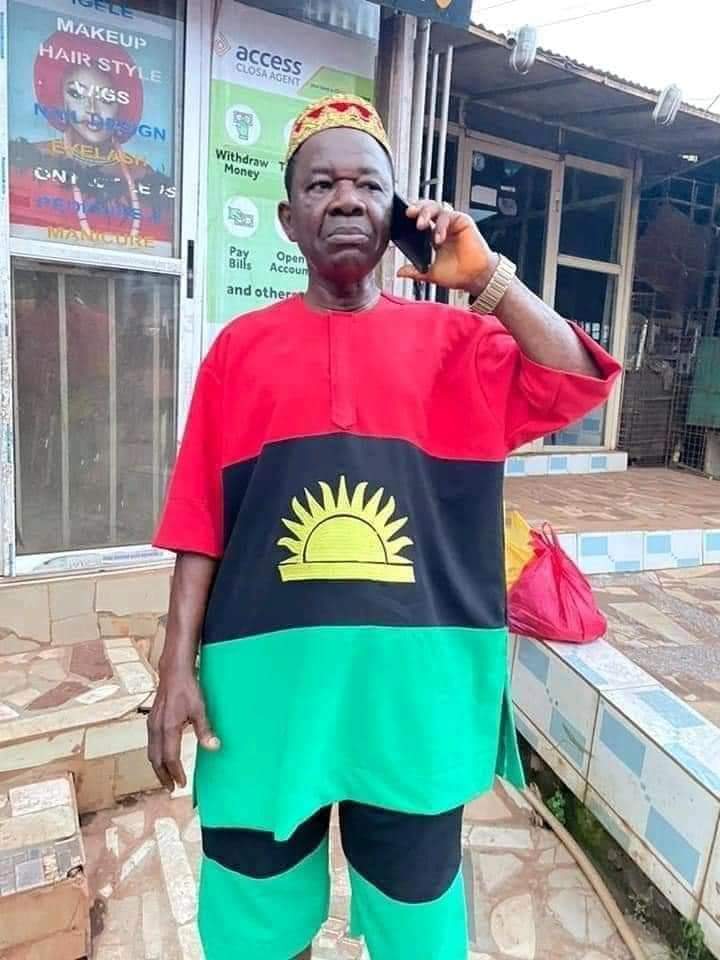
The harassment and arrest of celebrated Nollywood actor, Mr. Chiwetalu Agu, on Thursday, 7th October, 2021 by the Nigerian Army is illegal, unconscionable and unwarranted. The actor has not committed any criminal offence known to law. The Nigerian Army should stop ridiculing itself before the international community.

Supposing without conceding that the dressing of the legendary actor amounts to “incitement” as claimed by the Army, it is the Nigeria Police Force that should have responded. There is no evidence of incitement against him. Nothing was inscribed on the said cloth to incite the public.

Is the Army suggesting that wearing clothes with certain colours or identifying with certain colours amounts to inciting people to violence or that any colour identical to the Biafran flag is inciting?. That will be a dangerous proposition. If they are convinced about such whimsical argument, the government should test it in a competent court of law. The allegation that he is recruiting for or supporting IPOB is unsupported by evidence. It is a way of calling a dog a bad name in order to hang it. Discerning Nigerians can see through the smoke screen.

The military has no power in a constitutional democracy to arrest citizens; except in very special and exceptional circumstances like during war, state of emergency, insurrection or riot. Even at that, it has to be shown that the Police has been overwhelmed. That is the purport of Section 217 of the 1999 Constitution which limits the role of the Armed Forces to defending the territorial integrity of Nigeria and acting in aid of civil authorities. Is Nigeria at war?

What did Chiwetalu Agu do that overwhelmed the Nigeria Police Force to warrant the Army stepping in to aid the police in arresting him?

We have become so used to lawlessness, impunity and flagrant disregard for the fundamental rights of citizens that we now condone whatever nonsense is thrown at us by the authorities.

Wearing a cloth with colours similar to the Biafran flag is not defined as an offence under any written law in this country. It is IPOB that was proscribed, not Biafra.

A significant portion of the Nigerian population still sees Biafra as an idea. No government can kill an idea that people are emotionally attached to by deploying the military. History has shown that the best way to defeat an idea is by propagating a superior and more persuasive idea. In the last six years, the Buhari regime has been propagating the idea that the best way to govern a diverse country like Nigeria is by pursuing a vindictive policy of exclusion, religious bias and ethnic supremacy which has further polarized the citizens and isolated different parts of this country.

By promoting nepotism and ethnic irredentism, Buhari is not qualified to propagate a Pro-Nigeria ideology that can counter the renewed agitations by a section of the South East for Biafra. Rather than heal old wounds, Buhari is ferociously opening new ones. Yet, he continues to parrot the fallacy that the unity of Nigeria is non-negotiable.

While I wholeheartedly condemn the wanton killings in the South East and the ensuing violence, there should be no tolerance for high-handedness and blatant disregard for the rights of the citizens. Rules of Engagement must be strictly followed.

By the combined effect of Section 36 (8) and (12) of the 1999 Constitution, an act or conduct is only a crime if it is so defined in a written law which must also prescribe the punishment for the offence. The Supreme Court had resolved this matter long ago in the celebrated case of AOKO V. FAGBEMI (1961) 1 NLR 400 and more recently in the case of GEORGE V. FEDERAL REPUBLIC OF NIGERIA [2014] ALL FWLR (pt. 718) 879.

The very idea of telling citizens what colour of cloth to wear is not only ludicrous but offensive. We are not in Communist China or North Korea.

It is a sad commentary that the Buhari regime is working day and night to turn Nigeria into a police state.

If the military authority has a movie role for Chiwetalu Agu, they should approach him with respect with their offer and desist from making a mockery of the security situation in the South East. The attack on Chiwetalu Agu is a painful reminder that the Buhari regime is ruling Nigeria with the mindset of the civil war.

Under this regime, peaceful young Nigerians were shot and killed by the same Nigerian Army while raising the Nigerian flag and singing the national anthem at the Lekki Toll Gate. Till date, no single soldier has been court-martialed for that abominable desecration of what is supposed to be sacred national symbols. Yet, the same Army arrested Chiwetalu Agu for wearing a cloth identical to the Biafran flag.

In other words, under the draconian Buhari regime, both ‘Biafran colours’ and Nigerian colours are symbols of “incitement” with severe punishment that includes death. That is not how to build and unify a nation.

The Army should apologize to the iconic actor and pay him adequate compensation for subjecting him to harassment and public humiliation.

INIBEHE EFFIONG, ESQ.

inibehe.effiong@gmail.com

Categories
News

SCAMMING IN THE NAME OF GOD: HOW PAUL ENENCHE COMMISSIONED A ROAD HE DID NOT PAY FOR ~ Sunday Adelaja

Many people were excited when the news went viral that the senior pastor of Dunamis church in Abuja Dr Paul Enenche built and commissioned a road. Reformers and progressives were happy thinking a new dawn is finally on the Nigerian church, when the Bishops and senior pastors will finally begin to share some of the tithes and offering money with their host communities.It won’t even come to the minds of the biggest sceptics of the church that some of these shows are false pretence. A grand deception that is aimed at making the public think that the church is loving and taking care of their communities. Meanwhile the truth is that the Nigerian church only knows how to collect offerings and money from the public but never give back. Even when they occasionally do a hand out on Christmas or some other events it’s all to take in even more money and to release a big media promotion of what the church is purportedly doing. The church in nigeria is a scam, a grand conspiracy by the church elite to build their own empire for their glory but not God’s.

The pictures look exactly like the political show business that the Nigerian political elites demonstrate to wow their gullible voters. Unfortunately the Nigerian church and their high profile G.Os and Bishops are not any better than the corrupt politicians. Nothing demonstrates this better than the show of shame by the man in the dome, the pastor of the so called largest church building in the world. Everything is about self glory, glamour, and bewitchment all geared at deceiving the masses that they are true servants of God.

I was recently approached by one of the broken and hugely distressed pastors In Nigeria. This man and his family are being forced to live in poverty because of the callous practices in Nigerian churches.
Please take your time to read the letter from one of Paul Enenche own serving Pastors, who is an insider tell his own story as it took place. Of course after this expose it’s clear that his days are numbered in Dunamis…

“My name is Pastor Usman Yakubu, until recently, I was the Resident Pastor of Dunamis Church Karu-Jikwoyi, Before the Senior Pastor Dr Paul Enenche and his wife sent me to Kano
We embarked on the road construction of the path leading to the Church to allow for easy movement of members
Before we started I applied to Dr Enenche to give us exemption because all the monies we collect from every Dunamis locations in Nigeria are remitted to Headquarters.

They keep 70% and leave us with 30%
I applied for 4 months exemption for the road construction and he agreed
Strangely after we started the work his Niece who is the chief Accountant asked us to remit fully all funds 100%, instead of 70% like before.
This plunged us into serious debts
I have been begging him Dr. Enenche to clear the debts but he refused.

The senior Pastor only came and took the glory. I submitted to him that very day detailed information of all expenses incurred but him and his niece the Financial Controller of the Church has refused to pay the money. In the alternative, I pleaded that if they don’t want to pay, they should allow the location pay from the tithes and offerings generated but they insist we must remit 100% to the headquarters. When our monies get to the Headquarters Single Account, we don’t see it anymore”

From this self confession of this pastor, we can see that Nigerian churches are a family business. Hence it’s the niece of the senior pastor in charge of all the money by millions of followers and members. Can you imagine the wickedness of collecting all the monies of every state In Nigeria and taking them all to Abuja to fill the pocket of a single family.

Meanwhile members are living in abject poverty even among the staffs and pastors. Isn’t the tithe and offering of the various towns and cities meant to develop their various communities first of all. Is this not more wicked than what the federal government of Nigeria is doing. At least the federal government gives out monthly allocations to all states and local governments.

But in Nigerian church it’s the opposite the central church doesn’t give to poor branches or members but rather collect from them, leaving them with nothing to empower the same people and congregations that gave the money. This practice is not only limited to Dunamis, it’s the normal practice in almost all the new generation churches of nation. Do you want to know why ordinary Nigerians are as poor and beggarly? You need not look far, go and study the practices of the so called churches. They are the biggest factor of poverty of our country. Hence I wrote the book “HOW THE CHURCH CREATES ECONOMIC RECESSION”

May God give the church leadership In Nigeria a heart of repentance, otherwise things will only get worse not only in the church but in the nation as a whole.

For The Love Of God, Church And Nation
Pastor Sunday Adelaja
Kiev, Ukraine

Categories
Article

OCTOBER 1ST NATIONWIDE PROTEST IS A FUNDAMENTAL RIGHT: SECURITY AGENCIES MUST BE WELL GUIDED ~ Festus Ogun, Esq.

OCTOBER 1ST NATIONWIDE PROTEST IS A FUNDAMENTAL RIGHT: SECURITY AGENCIES MUST BE WELL GUIDED

As Nigeria clocks 61, patriotic and well-meaning Nigerians will storm the streets of major cities in protest against bad governance, acute insecurity, poverty, hunger, unemployment, gross disrespect for human rights and dignity and the crude wickedness of the Buhari administration.

Typical of the Nigerian authorities, chances are high that a clampdown will greet tomorrow’s historical protest. It is in view of this that we, at the TakeItBack Movement, remind all security agencies that tomorrow’s October 1st Protest remains a fundamental right enshrined under our extant laws in this country and no form of attack will be tolerated.

By the combined effect of Sections 39, 40 and 41 of the 1999 Constitution of the Federal Republic of Nigeria, as altered, the right to protest is safeguarded and guaranteed as a human right that shall be enjoyed by all citizens without arbitrary restraint. Articles 6, 9, 10, 11 and 12 of the African Charter on Human and Peoples Right equally protect the right to protest. Additionally, Articles 18-21 of the Universal Declaration of Human Rights, 1948 fully protect the constitutional liberty to protest.

Emphasising the sacred nature of the right to protest in a constitutional democracy, the Court of Appeal in the case of IGP V. ANPP (2008) 12 WRN 65 held that “certainly in a democracy, it is the right of citizens to conduct peaceful processions, rallies or demonstrations without seeking and obtaining permission from anybody. It is a right guaranteed by the 1999 Constitution and any law that attempts to curtail such right is null and void and of no effect whatsoever”.

Knowing fully well that Nigeria is still in the bondage of the political elites and neo-colonialism, we are compelled to remind the authorities of the need to observe all civil rules during our demonstrations tomorrow. While they can grace the historical protest, it is important to remind them that they have a duty to protect us and not arrest or assault us.

We shall not condone any form of harassment, intimidation, brutalization or arrest. We shall resist any attempt to encroach on our constitutionally guaranteed rights. The police and other security agencies are hereby put on notice and they should be guided accordingly.

Nothing, no one can stop an idea whose time has come. Aluta continua!

Design a site like this with WordPress.com
Get started